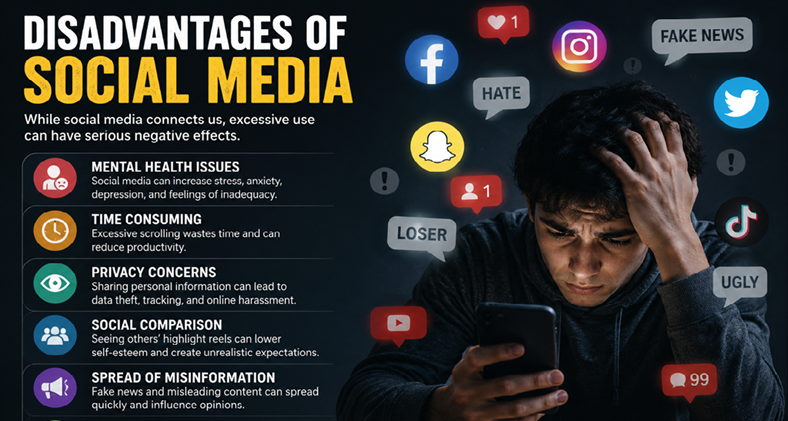
Social media has reshaped the way people communicate, learn, shop, and spend their free time. Platforms like Facebook, Instagram, TikTok, X, Snapchat, LinkedIn, Pinterest, and YouTube make it easy to connect with friends, discover new ideas, follow breaking news, and build professional networks.
For many people, those benefits are part of everyday life. Businesses rely on social platforms to reach customers, creators turn their content into careers, and families stay connected across cities, states, and even continents.
But there’s another side to the story.
The same platforms that make communication effortless can also affect mental health, productivity, privacy, relationships, and overall well-being. Hours of endless scrolling, carefully curated online lives, and constant notifications can quietly shape daily habits in ways many users don’t notice until the effects become difficult to ignore.
Researchers continue to examine how social media influences people of every age. While teenagers often receive the most attention, adults face many of the same challenges, from digital burnout to misinformation and unhealthy screen habits.
Understanding the disadvantages of social media isn’t about encouraging people to abandon these platforms altogether. Instead, it’s about recognizing the potential risks, developing healthier online habits, and making informed decisions about when, why, and how social media fits into everyday life.
This techlokesh org guide explores the most significant drawbacks of social media, explains why they matter, and offers practical advice to help you use these platforms more intentionally without giving up their benefits.
Benefits vs. Disadvantages of Social Media
Every technology comes with trade-offs, and social media is no exception. While these platforms offer incredible opportunities for communication and learning, they also introduce challenges that deserve equal attention.
| Benefits | Disadvantages |
|---|---|
| Instant communication | Screen addiction |
| Global networking | Mental health concerns |
| Educational resources | Misinformation |
| Business marketing | Privacy risks |
| Professional networking | Cyberbullying |
| Entertainment | Reduced productivity |
| Community support | Sleep disruption |
| Brand building | Unrealistic social comparisons |
The goal isn’t to label social media as either good or bad. Instead, it’s to understand where it adds value, where it creates problems, and how to strike a healthier balance between online and offline life.
Why Social Media Has Such a Powerful Influence
Most people don’t realize just how intentionally social media platforms are designed.
Every notification, recommended video, trending topic, and “like” is built to encourage another interaction. The longer users stay engaged, the more opportunities platforms have to display content and advertising.
Modern recommendation algorithms continuously analyze user behavior. They learn what you watch, click, search for, and share, then use that information to deliver even more personalized content.
This creates an experience that’s convenient, entertaining—and often difficult to step away from.
Several features contribute to social media’s powerful influence:
- Personalized content recommendations
- Infinite scrolling
- Instant feedback through likes and comments
- Push notifications
- Fear of missing out (FOMO)
- Short-form video feeds
- Auto-playing content
None of these features is harmful on its own. Together, however, they can encourage habits that gradually increase daily screen time without users realizing how much time has passed.
The Biggest Disadvantages of Social Media
Mental Health Challenges
Mental health remains one of the most widely discussed concerns surrounding social media.
People naturally compare themselves to others. Online, however, those comparisons often involve carefully edited photos, major life milestones, luxury vacations, fitness transformations, or career achievements instead of everyday reality.
Seeing a constant stream of polished content can leave users feeling as though everyone else is happier, more successful, or living a better life.
Over time, that perception may contribute to:
- Anxiety
- Depression symptoms
- Lower self-confidence
- Loneliness
- Chronic stress
- Emotional exhaustion
While teenagers are especially vulnerable because they’re still developing emotionally, adults are far from immune. Many professionals, parents, and college students report similar struggles after spending extended periods on social media.
The Problem With Constant Comparison
Most people don’t post ordinary moments.
Instead, they share celebrations, promotions, vacations, achievements, and carefully selected highlights. What audiences see is often a polished version of reality rather than everyday life.
When users compare their own behind-the-scenes experiences with someone else’s highlight reel, unrealistic expectations naturally follow.
Remembering that social media rarely reflects the full picture can help reduce unnecessary pressure and protect emotional well-being.
Social Media Addiction
One of the most significant disadvantages of social media is how easily casual use can become a daily habit that’s difficult to control.
Many people unlock their phones without thinking. They check notifications while eating breakfast, waiting in line, watching television, or even during conversations.
What begins as a quick glance can easily turn into an hour of continuous scrolling.
Common signs of excessive social media use include:
- Checking apps immediately after waking up
- Feeling uncomfortable without internet access
- Losing track of time while scrolling
- Ignoring responsibilities
- Refreshing feeds repeatedly
- Reaching for the phone without a clear reason
Unlike many unhealthy habits, excessive social media use often develops gradually. Because the behavior becomes part of everyday routines, many users don’t recognize how much time they’re spending online until it begins affecting work, school, sleep, or relationships.
Why Social Media Is So Hard to Put Down
Every notification creates anticipation.
A new like, comment, message, or follower triggers a small reward response in the brain. Over time, that cycle reinforces the habit of checking social media repeatedly throughout the day.
Platforms aren’t simply responding to user behavior—they’re designed to encourage continued engagement.
For some people, this leads to healthier online communities and meaningful conversations. For others, it creates a habit that’s surprisingly difficult to break.
Cyberbullying and Online Harassment
Social media has given millions of people a platform to share ideas and connect with others. Unfortunately, it has also made harassment easier, faster, and more public.
Cyberbullying affects children, teenagers, professionals, athletes, public figures, and everyday users alike. Hurtful comments, fake accounts, rumor campaigns, and targeted harassment can spread quickly, sometimes reaching thousands of people within hours.
Common forms of online harassment include:
- Public humiliation
- Abusive messages
- Fake profiles
- Personal attacks
- Rumor spreading
- Threats
- Organized harassment
The emotional impact can be significant.
Victims may experience anxiety, depression, declining self-esteem, social withdrawal, and difficulty concentrating at school or work.
Unlike traditional bullying, online harassment doesn’t end when someone leaves school or the office. It can follow people into their homes through their phones, often around the clock.
Privacy and Data Security Risks
Every action on social media leaves behind a digital footprint.
From photos and location tags to searches and browsing behavior, platforms collect large amounts of information that help personalize content and advertising.
Although personalization improves the user experience, it also raises important questions about privacy and data security.
Some of the most common concerns include:
- Data collection
- Identity theft
- Account hacking
- Location tracking
- Third-party data sharing
- Phishing attacks
Even users with private profiles aren’t completely protected from security risks.
Oversharing Can Create Real-World Risks
Many people unknowingly share more personal information than they realize.
Birthdays, travel plans, workplaces, schools, family details, and real-time locations may seem harmless when posted individually. Combined, however, they can create opportunities for scammers, identity thieves, or criminals.
For example, announcing a two-week vacation before leaving home may unintentionally signal that a house will be empty.
Simple habits—such as limiting location sharing and reviewing privacy settings—can dramatically reduce unnecessary exposure.
Misinformation Spreads Faster Than Ever
Social media has become one of the fastest ways to share information.
Unfortunately, that speed also allows false information to travel just as quickly.
Anyone can publish content that appears convincing, regardless of whether it’s accurate. Edited videos, AI-generated images, misleading headlines, and fabricated stories can circulate widely before they’re challenged or corrected.
Common examples include:
- Health misinformation
- Political rumors
- Financial scams
- Fake celebrity stories
- Manipulated videos
- AI-generated content presented as authentic
Many users share posts within seconds, often without checking the original source.
Why False Information Travels So Quickly
People are naturally drawn to emotional, surprising, or controversial stories.
Content that sparks outrage or curiosity often receives more likes, comments, and shares than balanced reporting based on verified facts.
As a result, misinformation frequently spreads faster than reliable information, making critical thinking and source verification more important than ever.
Reduced Productivity
A quick social media break rarely stays quick.
What starts as five minutes checking notifications can easily become half an hour of scrolling through videos, comments, and recommendations.
These interruptions add up throughout the day and can noticeably reduce productivity.
Frequent distractions affect:
- Students completing assignments
- Office professionals
- Remote employees
- Business owners
- Freelancers
- Parents managing daily responsibilities
Studies consistently show that switching attention between work and social media reduces concentration and increases the time required to complete important tasks.
Small Interruptions Carry a Big Cost
Every time attention shifts away from meaningful work, the brain needs time to refocus.
Even brief interruptions can reduce efficiency, increase mistakes, and make mentally demanding work feel more exhausting than it actually is.
Over the course of a day, those lost minutes often become lost hours.
Sleep Problems and Poor Rest
For many people, social media is the last thing they see before falling asleep.
Late-night scrolling has become a routine, but it can interfere with healthy sleep in several ways.
Contributing factors include:
- Blue light exposure
- Endless scrolling
- Emotional stimulation
- Late-night notifications
- Fear of missing important updates
Poor sleep doesn’t just lead to morning fatigue. It also affects memory, concentration, mood, decision-making, and overall physical health.
Bedtime Scrolling Keeps the Brain Awake
Watching videos, replying to messages, or browsing social feeds stimulates the brain at the very time it’s preparing for rest.
Without realizing it, many users postpone bedtime night after night, reducing sleep quality and increasing daytime fatigue.
Even consistently losing one hour of sleep can have a measurable impact on long-term health and daily performance.
Less Face-to-Face Communication
Social media makes staying connected easier than ever, but convenience doesn’t always translate into deeper relationships.
Many conversations that once happened in person now take place through messages, reactions, or comments.
While digital communication is valuable, relying on it too heavily can gradually weaken important interpersonal skills.
These include:
- Active listening
- Reading body language
- Maintaining eye contact
- Resolving conflicts
- Expressing empathy
- Building deeper personal connections
Technology works best when it complements real-world relationships rather than replacing them. Spending meaningful time with family, friends, and colleagues remains one of the healthiest ways to build lasting connections.
How Social Media Affects Children and Teenagers
Young people have never known a world without smartphones or social media. For many, these platforms are where friendships develop, trends spread, and daily conversations happen. They also provide opportunities to learn new skills, express creativity, and connect with supportive communities.
At the same time, children and teenagers face risks that adults may handle more easily.
Because they’re still developing emotionally, online experiences often have a stronger impact on confidence, self-image, and decision-making. A single negative interaction or a constant need for online approval can influence how they see themselves long after they log off.
Some of the most common challenges include:
- Low self-esteem
- Fear of missing out (FOMO)
- Cyberbullying
- Exposure to inappropriate content
- Contact from online predators
- Shortened attention spans
- Declining academic performance
- Increased anxiety
Parents and educators don’t need to eliminate social media entirely. Instead, teaching responsible online behavior, encouraging open conversations, and setting reasonable boundaries often produce better long-term results than strict bans.
When Likes Become Self-Worth
Many teenagers naturally associate likes, comments, and follower counts with popularity.
If a post receives less attention than expected, it can feel like personal rejection rather than a simple algorithmic outcome. Over time, relying on digital validation for confidence may create an unhealthy cycle that’s difficult to break.
Helping young people understand that online engagement doesn’t determine their value is one of the most effective ways to build lasting confidence.
Physical Health Risks Often Go Overlooked
The disadvantages of social media aren’t limited to emotional well-being. Spending hours each day on a phone or computer can also affect physical health.
Long periods of sitting combined with repetitive device use place strain on the body in ways many people don’t notice until discomfort becomes persistent.
Common physical effects include:
- Eye strain
- Neck pain
- Back pain
- Poor posture
- Headaches
- Reduced physical activity
- Weight gain from a sedentary lifestyle
Fortunately, these problems are often preventable with small adjustments throughout the day.
Digital Eye Strain Is Increasing
Looking at a bright screen for extended periods forces the eyes to work continuously.
Many frequent users experience symptoms such as:
- Dry eyes
- Blurred vision
- Eye fatigue
- Increased sensitivity to light
Eye care professionals often recommend the 20-20-20 rule. Every 20 minutes, look at something approximately 20 feet away for at least 20 seconds. It’s a simple habit that can noticeably reduce eye fatigue during long screen sessions.
Echo Chambers Can Limit Critical Thinking
One of social media’s greatest strengths is personalization. Ironically, it’s also one of its biggest weaknesses.
Algorithms learn what users enjoy and respond by recommending more of the same content. Over time, this creates an environment where people repeatedly encounter opinions that reinforce their existing beliefs.
This phenomenon is commonly known as an echo chamber.
Potential consequences include:
- Confirmation bias
- Greater political polarization
- Less exposure to different perspectives
- Reduced critical thinking
- More divisive online discussions
A healthy information diet includes viewpoints from multiple credible sources, even when they challenge personal opinions.
Why Algorithms Narrow Your Feed
Recommendation systems prioritize engagement.
If someone frequently watches one type of content, the platform assumes they want more of it. Eventually, opposing viewpoints may appear less often, creating the impression that everyone shares the same opinion.
That perception rarely reflects reality.
Online Scams Continue to Grow More Sophisticated
Cybercriminals understand where people spend their time, and increasingly, that’s on social media.
Modern scams look far more convincing than they did just a few years ago. Fake online stores, fraudulent investment opportunities, impersonation accounts, and phishing messages regularly appear across major platforms.
Some of the most common scams include:
- Fake online retailers
- Cryptocurrency investment fraud
- Romance scams
- Phishing messages
- Employment scams
- Giveaway scams
- Customer support impersonation
- Fake charitable fundraisers
Many of these scams create a false sense of urgency, encouraging victims to act before they have time to verify the information.
Warning Signs You Should Never Ignore
Most fraudulent accounts share several common characteristics.
Watch for:
- Requests for passwords or verification codes
- Pressure to respond immediately
- Unrealistically generous offers
- Requests for unusual payment methods
- Suspicious links
- Newly created or unverified accounts
Taking a few extra minutes to verify a source can prevent financial loss and protect your personal information.
Social Media Can Encourage Impulse Spending: Disadvantages of Social Media
Influencer marketing has become one of the most powerful forms of online advertising.
Because audiences often develop trust in creators they follow regularly, product recommendations can feel more like personal advice than traditional advertising.
That trust frequently influences purchasing decisions.
Examples include:
- Fashion trends
- Beauty products
- Consumer electronics
- Fitness supplements
- Home décor
- Luxury accessories
Repeated exposure to promotional content may encourage unnecessary purchases and increase monthly spending without people fully realizing it.
Why Influencer Recommendations Feel Authentic
Successful creators build long-term relationships with their audiences.
As familiarity grows, followers often place significant trust in their opinions. While many recommendations are genuine, consumers should still research products independently before making purchasing decisions.
Pros and Cons of Social Media: Disadvantages of Social Media
Like most technologies, social media delivers meaningful benefits alongside measurable risks.
| Pros | Cons |
|---|---|
| Connects people around the world | Can become addictive |
| Supports education and learning | May contribute to anxiety and depression |
| Helps businesses reach customers | Creates privacy concerns |
| Builds professional networks | Reduces productivity |
| Encourages creativity | Spreads misinformation |
| Creates supportive communities | Enables cyberbullying |
| Provides entertainment | Disrupts healthy sleep habits |
| Promotes entrepreneurship | Encourages unrealistic comparisons |
The goal isn’t to eliminate social media from everyday life. It’s to use it intentionally, with habits that maximize its advantages while limiting its downsides.
Expert Tips for Healthier Social Media Habits: Disadvantages of Social Media
Small, consistent changes usually produce better long-term results than dramatic digital detoxes.
Here are several practical strategies experts commonly recommend.
Set Daily Screen-Time Limits
Most smartphones include built-in tools that track app usage.
Reviewing those numbers often surprises people. Even reducing social media use by 30 minutes each day creates more time for exercise, hobbies, reading, or meaningful conversations.
Disable Unnecessary Notifications
Every alert competes for your attention.
Turning off non-essential notifications reduces distractions and allows you to check social media on your schedule rather than reacting every time your phone vibrates.
Be Selective About Who You Follow
Your feed should improve your day—not leave you feeling discouraged.
Unfollow or mute accounts that consistently create stress, negativity, or unhealthy comparisons. Replace them with creators who educate, inspire, or provide reliable information.
Verify Information Before Sharing
Before reposting breaking news or viral claims, pause for a moment.
Checking trusted news organizations, government agencies, or established research institutions helps prevent the spread of misinformation and protects your credibility.
Strengthen Your Privacy Settings
Protecting personal information should become a routine habit.
Take time to:
- Enable two-factor authentication
- Use strong, unique passwords
- Review privacy settings regularly
- Limit public location sharing
- Avoid posting sensitive personal details
These simple steps dramatically reduce many common online security risks.
Create Screen-Free Moments
Not every part of the day needs a phone.
Try setting aside device-free time during:
- Family dinners
- Work meetings
- Exercise
- Reading
- Outdoor activities
- The hour before bedtime
These small routines improve focus, strengthen relationships, and support better mental health.
Invest More Time in Real-Life Relationships
No amount of online interaction can fully replace face-to-face conversations.
Making time for family, friends, neighbors, and coworkers builds stronger emotional connections and creates experiences that social media simply can’t replicate.
Simple Habits That Make a Lasting Difference: Disadvantages of Social Media
Improving your relationship with social media doesn’t require deleting every app.
Instead, focus on sustainable habits that gradually reduce unnecessary screen time while preserving the benefits these platforms offer.
A practical weekly plan might include:
- Track your screen time.
- Remove apps you rarely use.
- Follow more educational and trustworthy creators.
- Keep your phone out of the bedroom at night.
- Schedule one social media-free day each week.
- Replace one scrolling session with exercise or a hobby.
- Review your privacy settings every few months.
These small changes may seem simple, but together they can improve focus, reduce stress, strengthen relationships, and create a healthier balance between digital life and the real world.
(FAQs) About Disadvantages of Social Media
1. What are the biggest disadvantages of social media?
The biggest disadvantages of social media include excessive screen time, mental health challenges, cyberbullying, privacy concerns, misinformation, reduced productivity, poor sleep, and unrealistic social comparisons. While these issues don’t affect everyone equally, they often become more noticeable when social media use is frequent and unbalanced.
2. How does social media affect mental health?
Social media can influence mental health in several ways. Constant comparison with carefully curated posts may increase feelings of anxiety, loneliness, stress, or low self-esteem. Spending too much time online can also contribute to emotional exhaustion and make it harder to disconnect from everyday pressures.
3. Is social media addiction a real concern?
Yes. Many people develop habits that make social media difficult to put down. Compulsively checking notifications, scrolling for long periods, or feeling anxious without access to favorite apps can interfere with work, school, relationships, and sleep. Recognizing these patterns early makes them easier to manage.
4. How can I protect my privacy on social media?
Protecting your privacy starts with a few simple habits:
- Create strong, unique passwords.
- Enable two-factor authentication.
- Review privacy settings regularly.
- Avoid sharing sensitive personal information.
- Limit location sharing whenever possible.
- Be cautious with unexpected links and direct messages.
Small security improvements can significantly reduce the risk of identity theft and account compromise.
5. Why does misinformation spread so quickly on social media?
Social media platforms reward content that generates attention. Posts that provoke strong emotions—whether excitement, fear, or outrage—often receive more likes, comments, and shares than carefully verified information. As a result, misleading content can circulate widely before reliable sources have an opportunity to correct it.
6. Are children and teenagers more vulnerable to social media’s negative effects?
Generally, yes. Young users are still developing emotionally and socially, making them more susceptible to cyberbullying, peer pressure, unrealistic comparisons, and the desire for online validation. Healthy guidance from parents, educators, and caregivers can help children develop responsible digital habits.
7. Can social media reduce workplace productivity?
It certainly can. Frequent notifications and repeated interruptions make it harder to stay focused. Even short breaks to check social media can disrupt concentration, causing tasks to take longer and reducing overall productivity throughout the day.
8. Should I stop using social media completely?
For most people, the answer is no.
Social media offers genuine benefits, including communication, education, networking, entertainment, and business opportunities. The healthier approach is to use these platforms intentionally, set reasonable boundaries, and make time for offline activities that support your well-being.
9. How much social media use is considered too much?
There isn’t a universal number of hours that applies to everyone. Instead of focusing solely on screen time, consider how social media affects your daily life.
If it begins interfering with your sleep, relationships, work, studies, physical health, or emotional well-being, it may be time to reevaluate your habits and establish healthier limits.
10. What’s the healthiest way to use social media?
Healthy social media use comes down to balance and intention.
Set screen-time limits, follow trustworthy accounts, verify information before sharing it, protect your privacy, and avoid comparing your everyday life with someone else’s curated online highlights. Most importantly, make room for meaningful experiences away from your screen.
Final Thoughts: Disadvantages of Social Media
Social media has changed the way people communicate, learn, work, and stay informed. It has helped businesses grow, strengthened long-distance relationships, created new career opportunities, and made information more accessible than ever before.
At the same time, its influence reaches far beyond the screen.
The disadvantages of social media—from mental health concerns and online harassment to privacy risks, misinformation, digital addiction, and declining productivity—deserve thoughtful attention. These challenges don’t mean social media is inherently harmful, but they do highlight the importance of using it with awareness and intention.
Healthy digital habits are built over time, not overnight.
Simple steps such as limiting screen time, protecting personal information, verifying sources, and making face-to-face relationships a priority can dramatically improve the way social media fits into your daily routine.
Technology should support your life, not control it. When used responsibly, social media can remain a valuable tool without becoming a constant distraction or source of stress.